
Hy.G Motors · made in Vannes, France
RIM-drive motors put the rotor at the blades, cutting mechanical losses. The result: over 90% efficiency, near silence, and zero oil in the water.
Talk to us about your boatThe RIM difference
In a conventional electric outboard, power travels from motor to shaft to propeller, losing energy at each step. Hy.G builds the motor into a ring around the blades. Fewer moving parts, no oil, no gaskets, and about 30% more efficiency than a conventional electric motor.
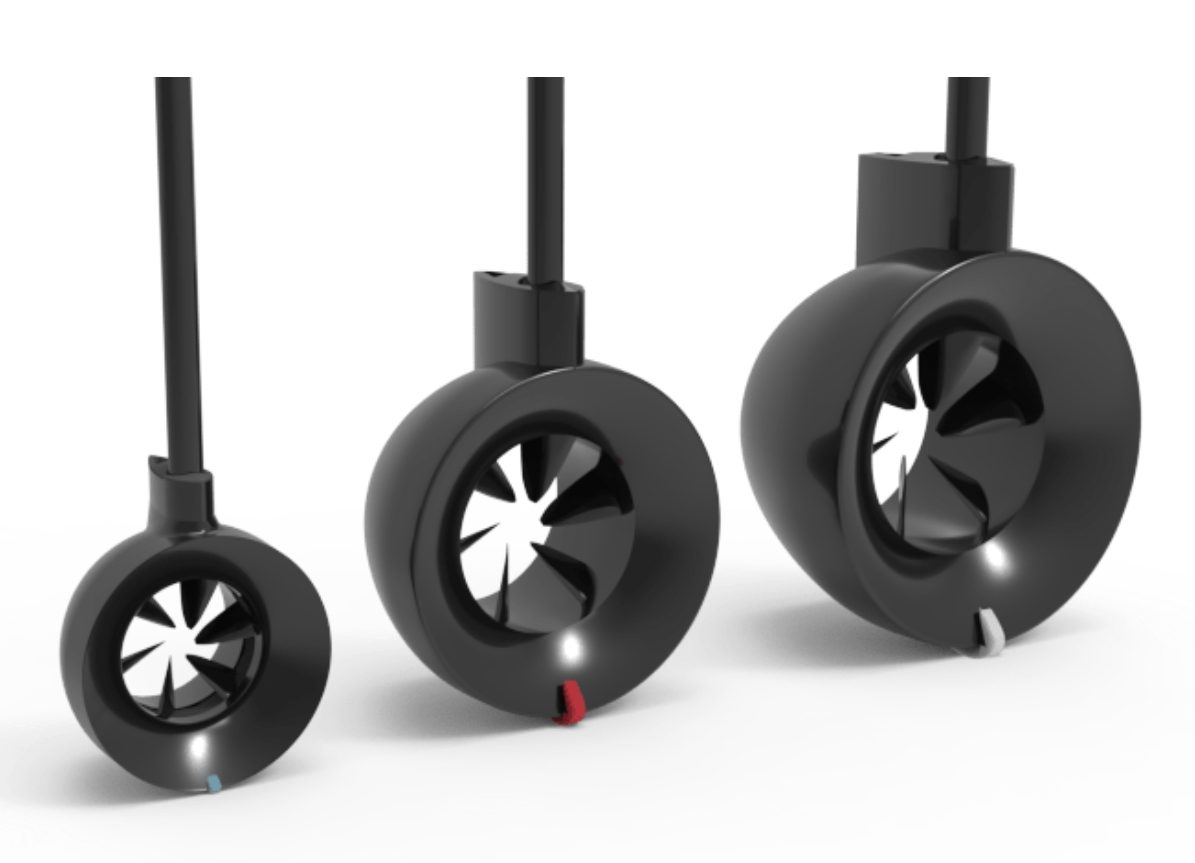
The range
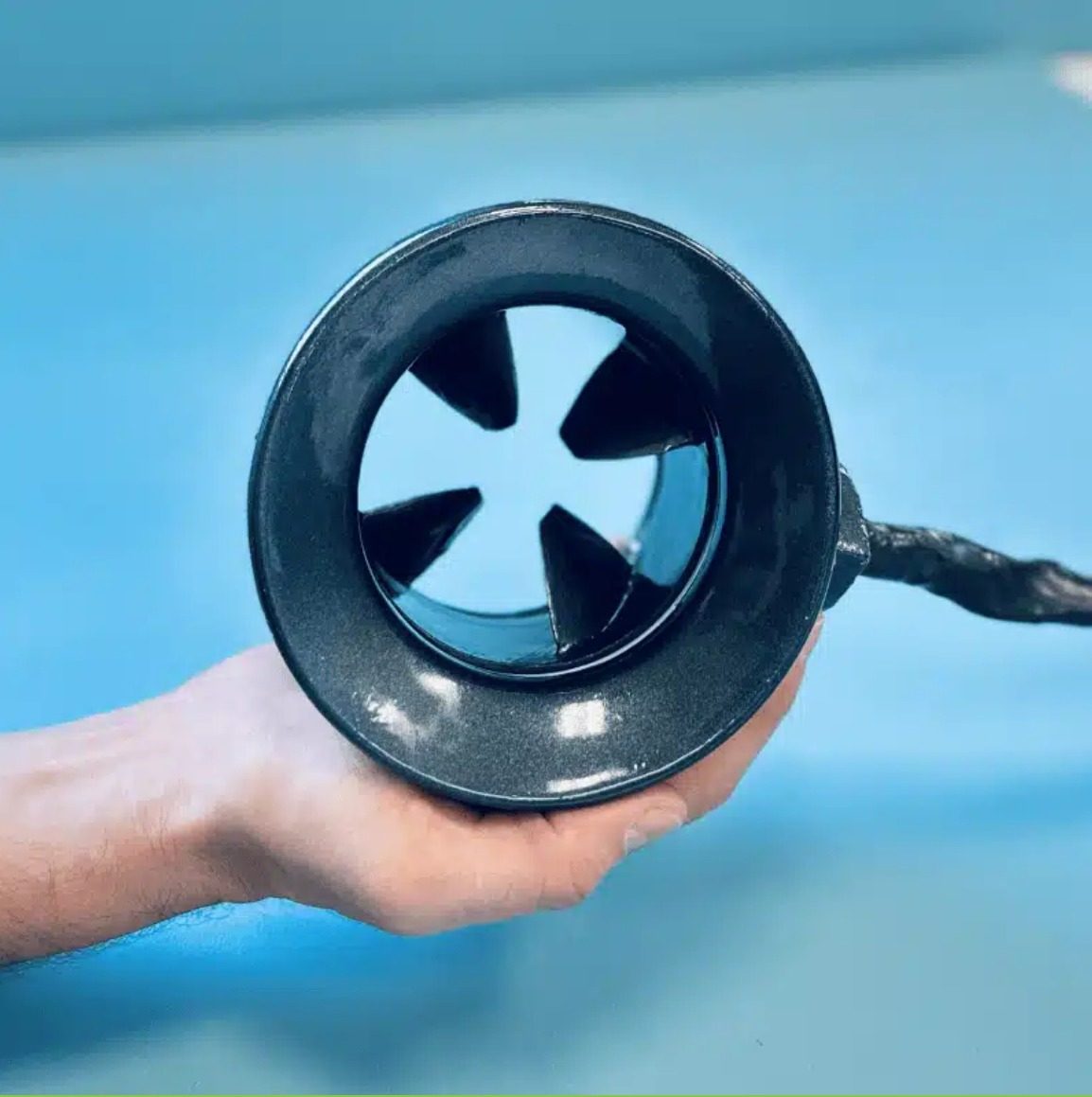
The compact unit. Sized for ASVs, AUVs, ROVs, tenders, and drone platforms, and it doubles as an electric water pump for the water sector.
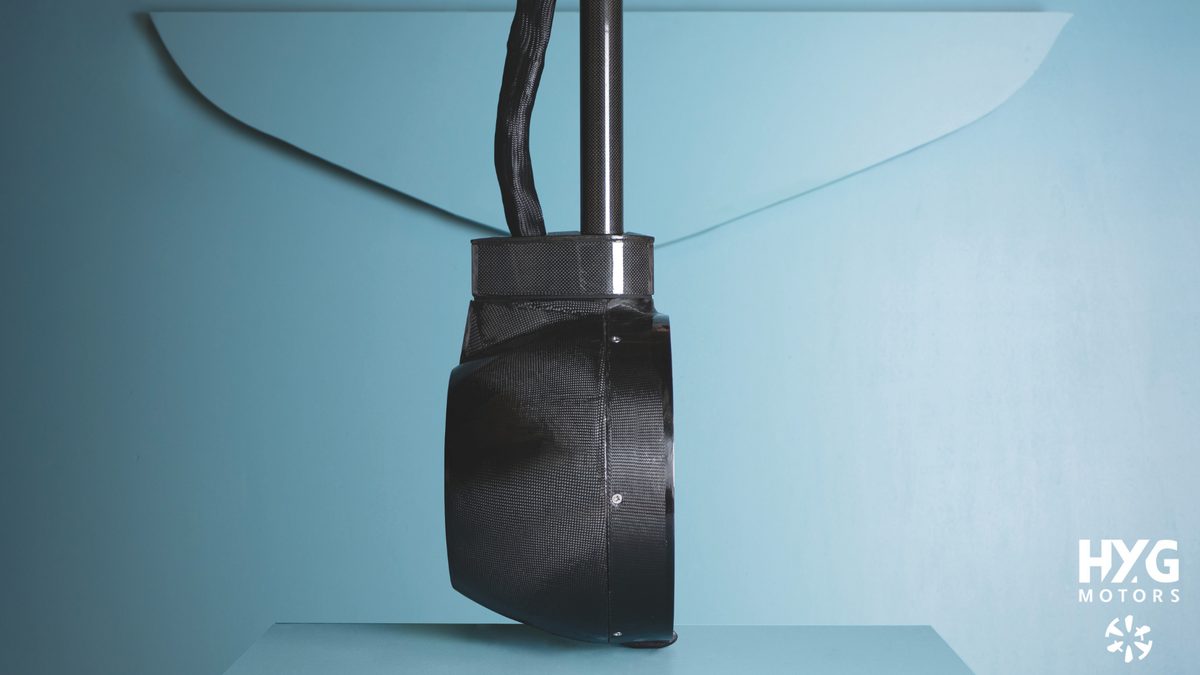
6 kW continuous, the equivalent of a 20 HP petrol outboard, from a 19 kg motor delivering 120 kgf of static thrust. For sailboats and motorboats up to 4.5 tons. License-free operation in many jurisdictions.
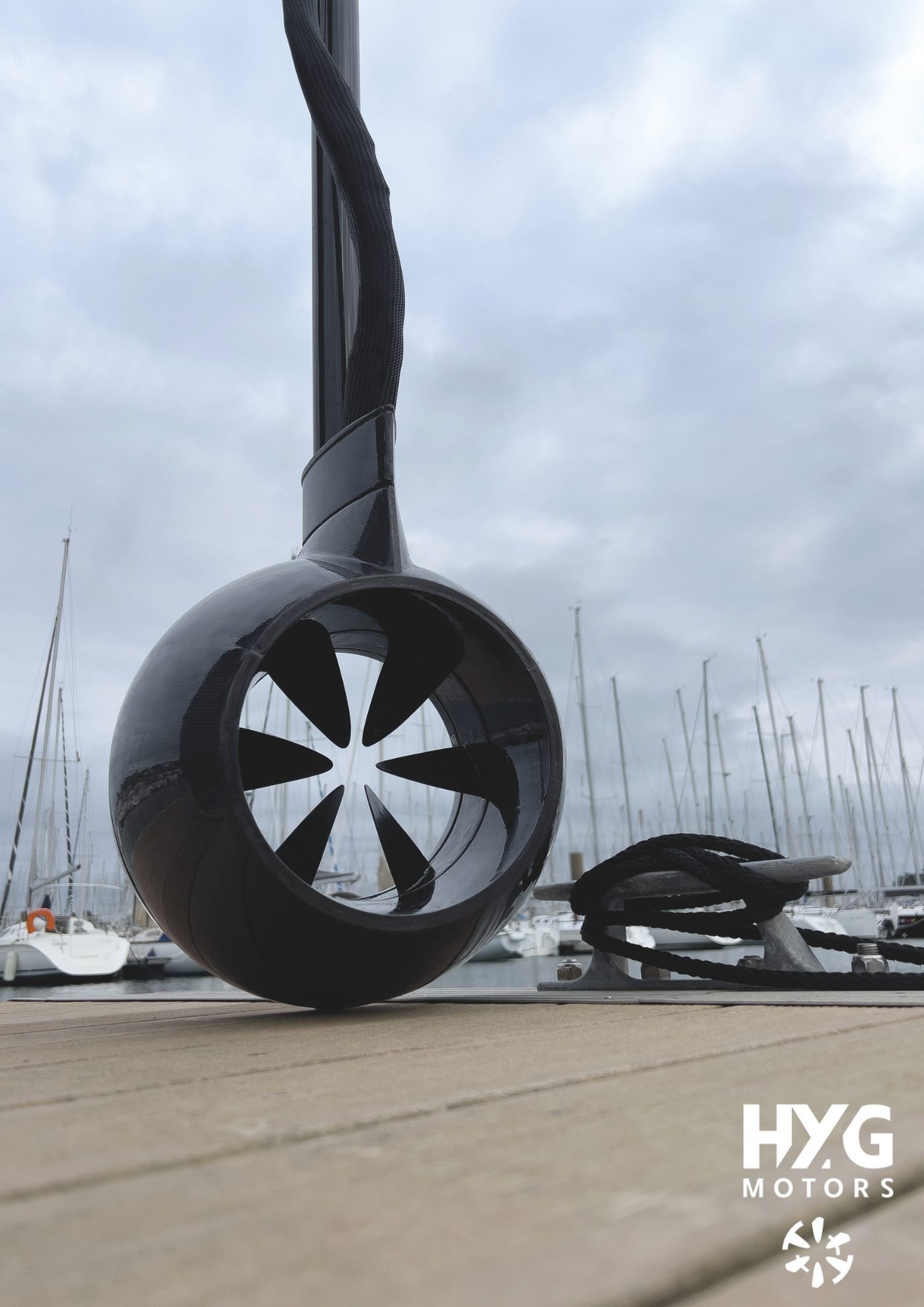
14 kW continuous, matching the static thrust of a 50 HP petrol outboard from a motor weighing 28 kg. For vessels up to 10 tons, with 200 kgf of thrust.
A larger RIM30 is announced by the factory and not yet available. Ask us where it stands if you're planning a build around it.
Specifications
| RIM6 | RIM14 | |
|---|---|---|
| Continuous mechanical power | 6,000 W | 14,000 W |
| Electrical consumption | 7,000 W | 16,000 W |
| Max current draw | 130 A | 310 A |
| Petrol outboard equivalent | 20 HP | 30 HP on power, 50 HP on thrust |
| Conventional e-outboard equivalent | 10 kW | 25 kW |
| Vessel size | Up to 4.5 tons | Up to 10 tons |
| Electric efficiency | >90% | >90% |
| Static thrust | 120 kgf (265 lbf) | 200 kgf (441 lbf) |
| Motor weight | 19 kg (42 lb) | 28 kg (62 lb) |
| Shaft length | 100 cm, adjustable | 100 cm, adjustable |
| Nominal voltage | 48 V | 48 V |
| Battery (LiFePO4) | 48 V, 5.38 kWh packs; number of packs sized to the boat | |
| Fast charge | Under 2 hours per pack | |
| Max propeller speed | 1,200 rpm | 1,200 rpm |
| Hydrogeneration | Yes | Yes |
| Maneuverability | 360° | 360° |
| Control | Tiller, offset steering, or fixed | |
Figures from Hy.G's published RIM6 and RIM14 pages, checked August 2026. The RIM14's two petrol equivalents are both the manufacturer's: 30 HP compares available power, 50 HP compares static thrust. Hy.G's technology overview page quotes the RIM6 slightly differently again (6.7 kW consumed, 6 kW at the shaft), so ask us for the current datasheet before specifying a build. Battery life: 3,000 cycles minimum. Running time 1h to 3h30 depending on usage.
Energy
Each Energy pack is a 48 V, 5.38 kWh LiFePO4 battery in an IP66 marine housing, rated for 3,000 cycles minimum. Standard charging takes 7 hours on a 650 W charger; the 2,900 W fast charger does it in under 2.
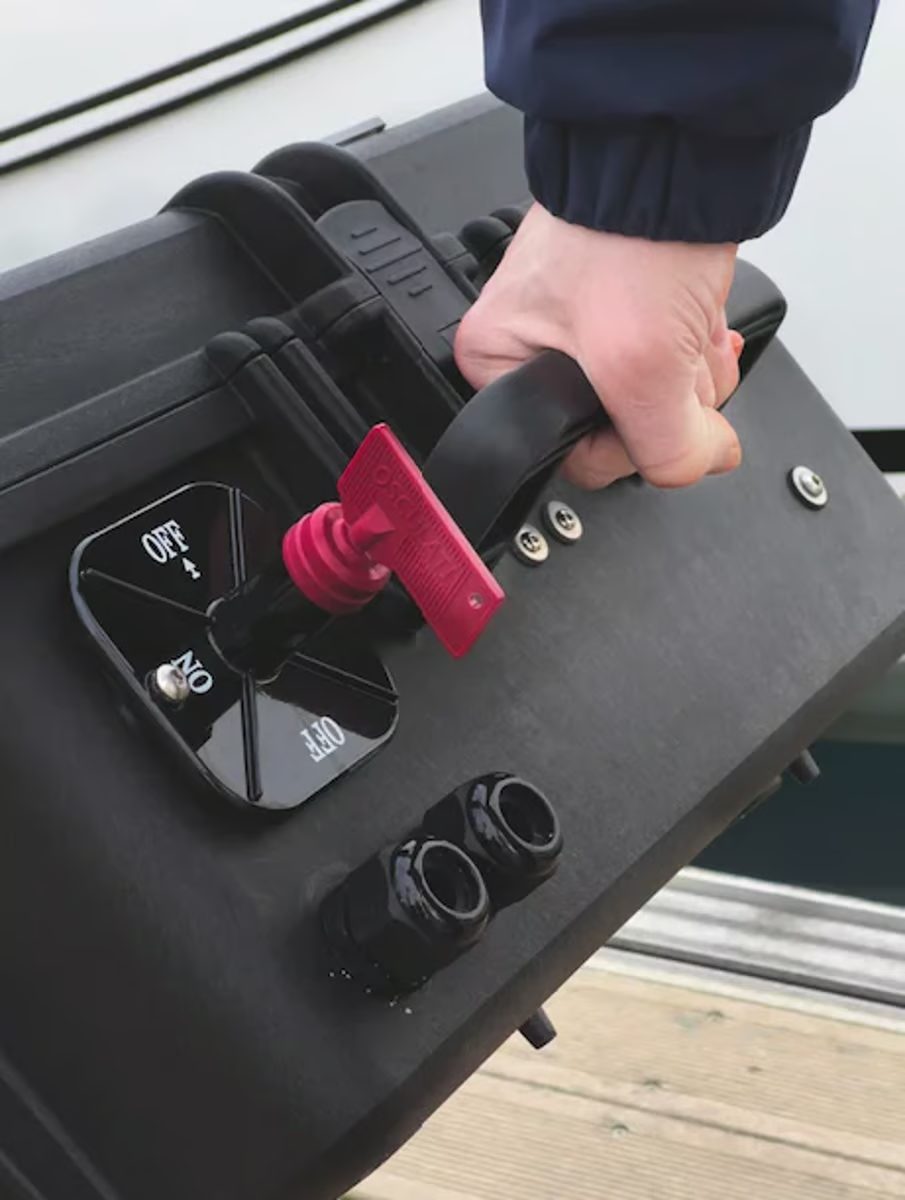
Command, cabling, and batteries ship together as one kit, so a yard can install the full system without electrical engineering on their side.
Where it fits
Hy.G has built electric thrusters in Brittany since 2012, from raw copper, neodymium, and carbon rather than bought-in assemblies. We bring that output to North America and support it here.
Silence and license-free operation suit rental fleets. Low maintenance suits the operator's margins.
The RIM1.5's size and efficiency fit autonomous and remotely operated vessels where every watt matters.
Instant torque, quiet approach, and no fuel logistics. Hy.G units have been trialed by French rescue services.
RIM6 and RIM14 demonstration units are available through ORCA Marine in Brunswick. Come see one run, or ask for the datasheets.